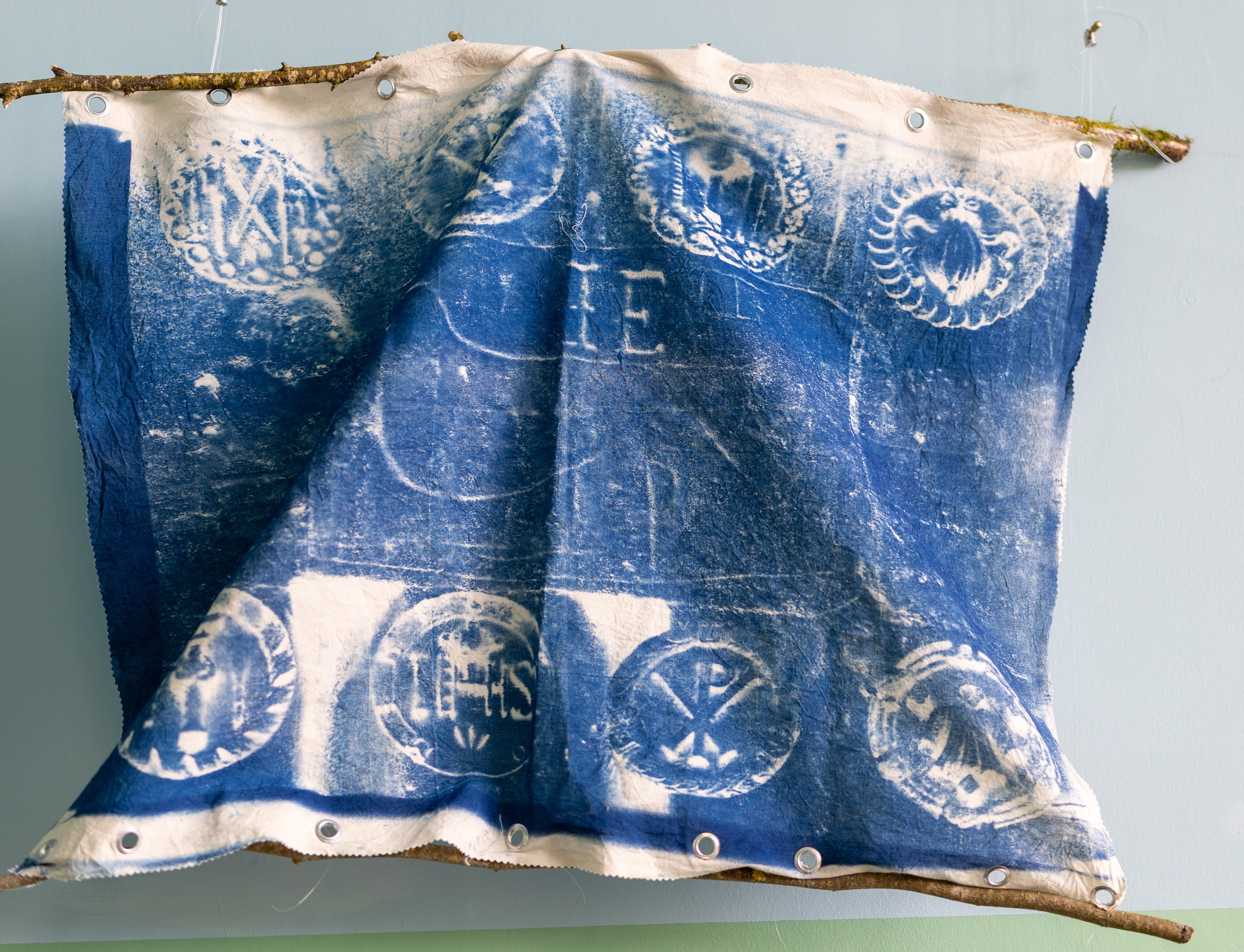
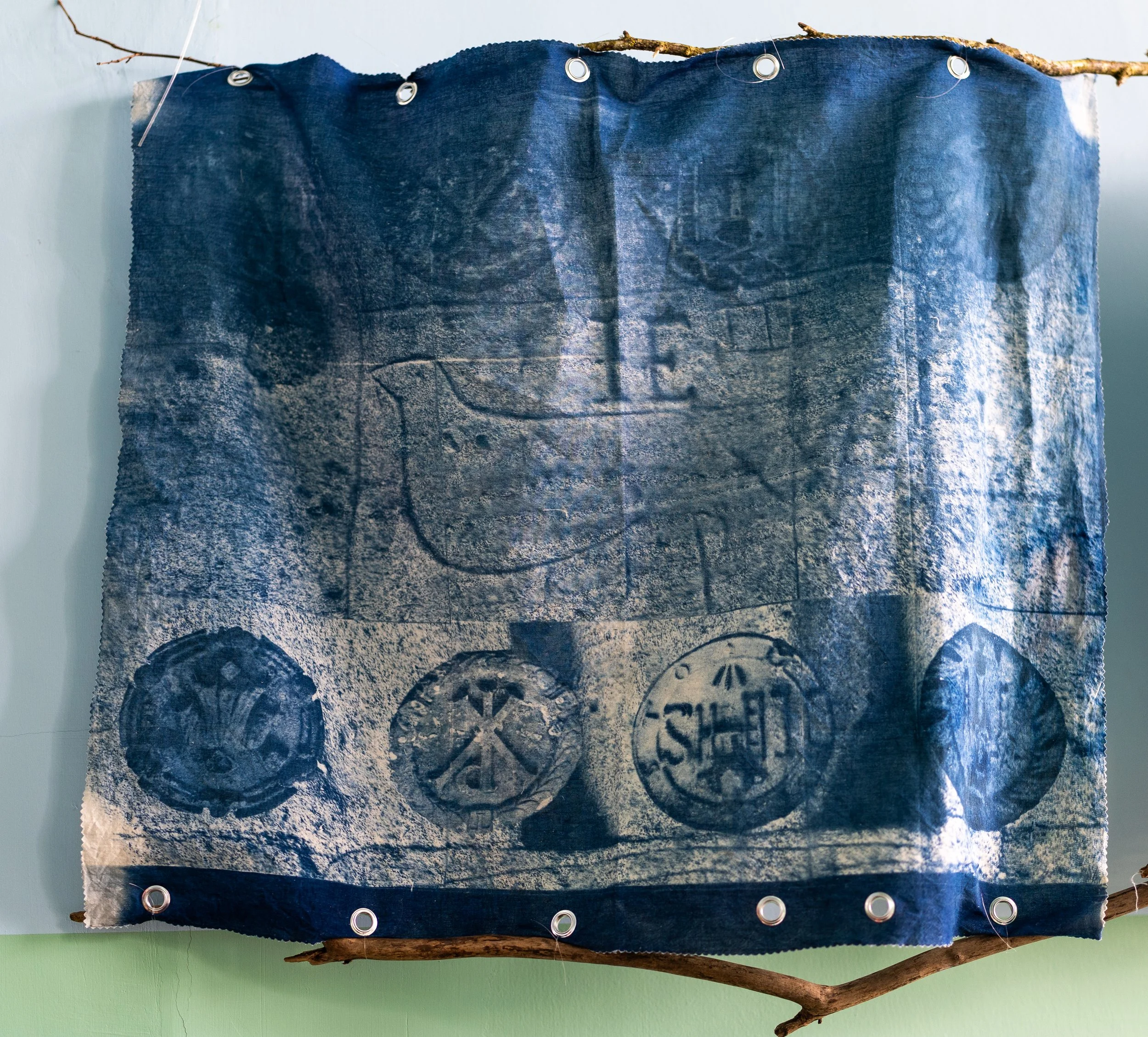
Resistance: A Photographic Exploration of Defiance at Lyveden
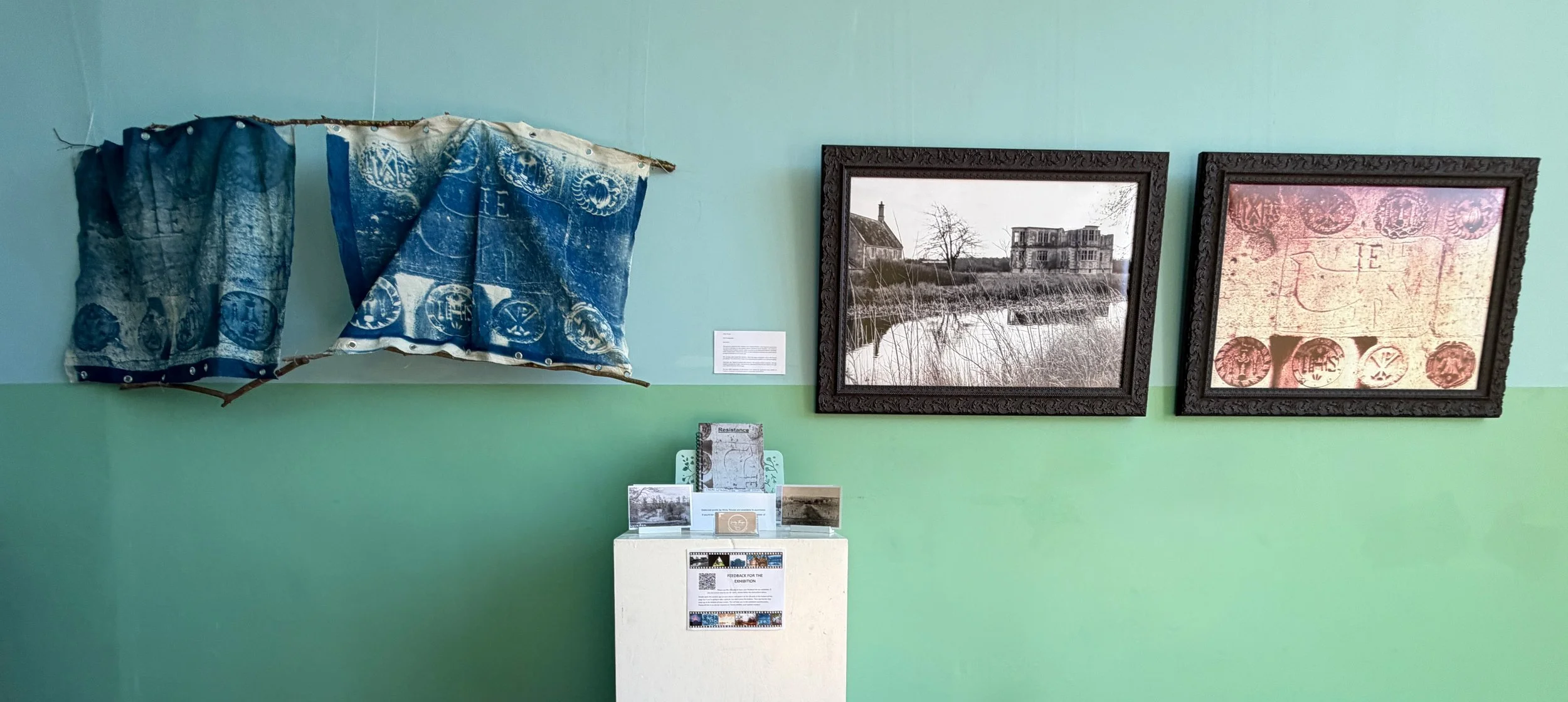
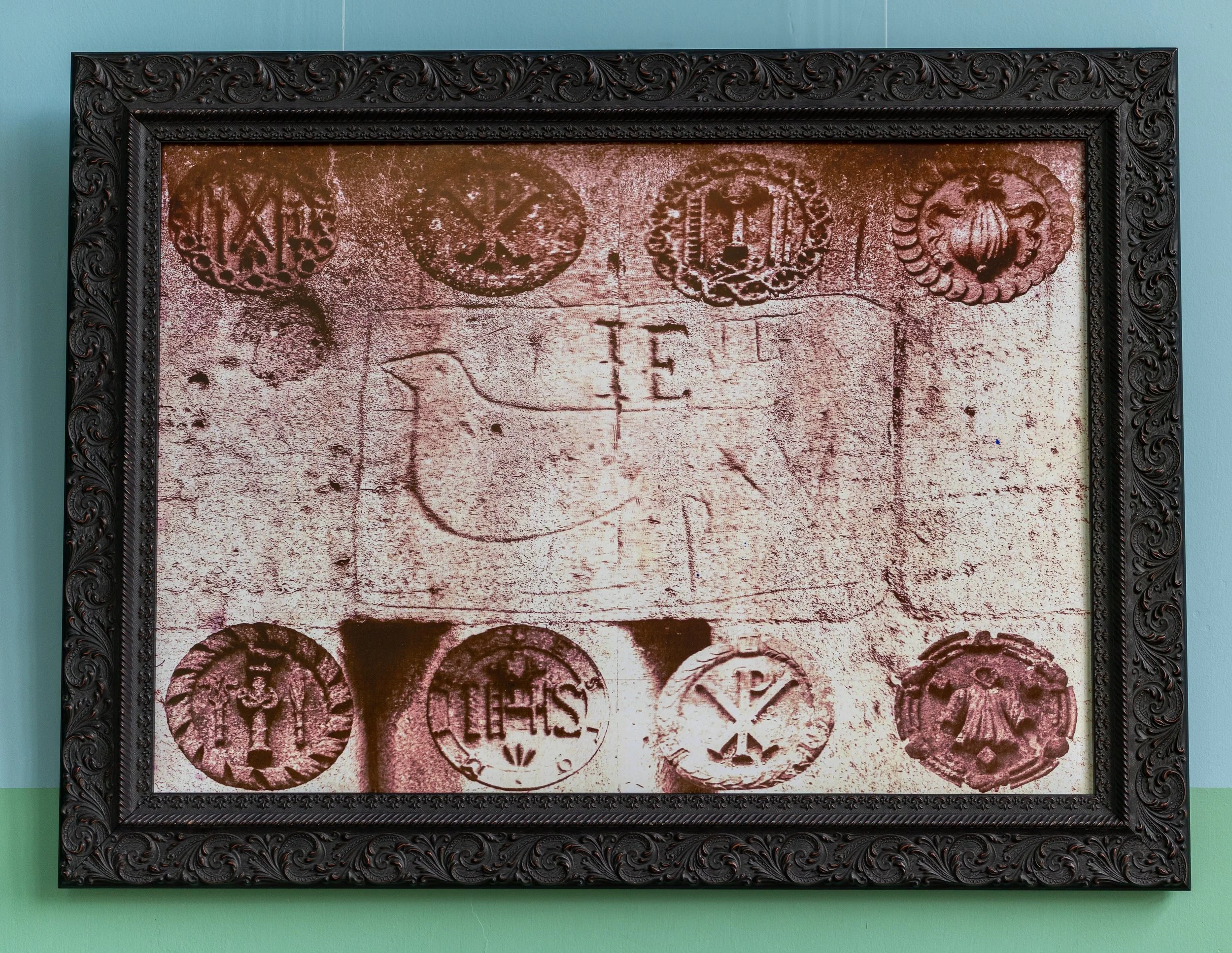
This project is inspired by Sir Thomas Tresham’s unwavering refusal to convert from Catholicism to the Anglican Church under Queen Elizabeth I, which resulted in significant fines and imprisonment. Tresham encoded his defiance into the architecture of his unfinished garden lodge at Lyveden New Bield, using hidden Catholic symbolism.
Symbolism: The building’s design incorporates sacred numbers
3 (Holy Trinity),
5 (wounds of Christ)
7 (instruments of the Passion/crucifixion).
The work’s imagery focuses on these religious carvings and devotional bird graffiti found on the structure.
Cyanotype was chosen as the medium because its process — where a negative resists UV light to form the image — mirrors the theme of resistance and Tresham’s defiance.
Exhibits inside of Lyveden Manor House
The final pieces are visually and physically linked to the Lyveden site:
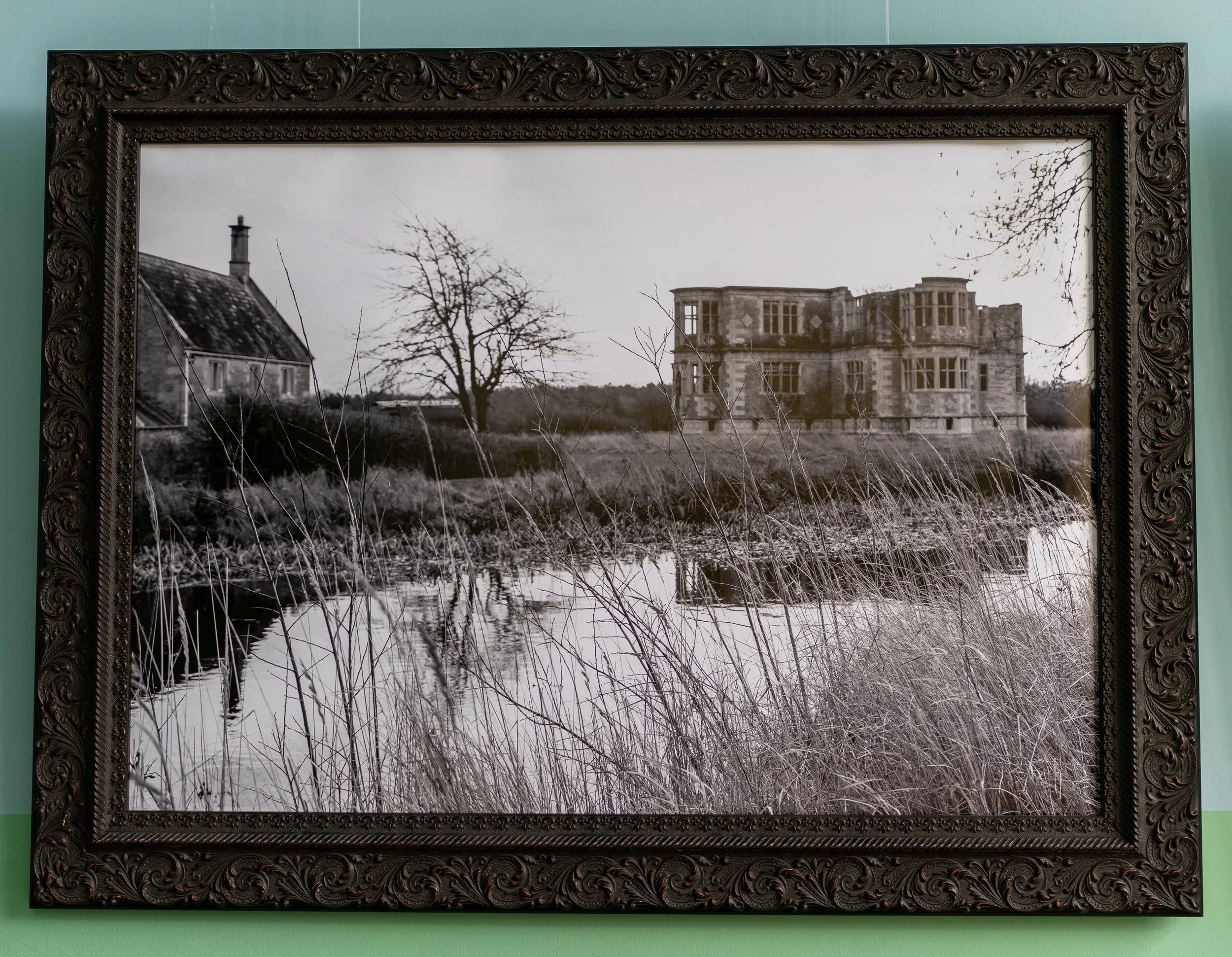
Indoor Prints: Indoor cyanotype prints on watercolour paper were bleached and toned with stewed tea to achieve a colour resembling Lyveden’s weathered stone, echoing the structure’s age and its resistance to time. The framed cottage print sits between the indoor cyanotype panels, working as a focal point and anchoring the work back to Lyveden itself. Showing the cottage in black and white alongside the tea‑toned cyanotypes emphasises the contrast between the solid, surviving building and the more experimental cyanotype pieces, while still keeping everything visually tied to the site.
Intended Exhibits outside at Lyveden
The Banners: The cyanotype banners, printed on unhemmed, unbleached cotton fabric, are intended to show how the images resist and change in response to outdoor elements over time. This material choice connects the work to the building’s unfinished state and lack of funds after Tresham’s death. The prints were physically linked to the site by using the sun and river water from Lyveden during creation. When the banners were hung inside, sticks found on the Lyveden grounds were used for support, symbolising that ‘part of Lyveden is physically supporting a show of resistance.