Cyanotype is one of the oldest photographic printing processes, dating back to 1842. It is beloved for its distinct Prussian blue colour and its simplicity, as it uses sunlight (UV light) rather than a darkroom to develop. The process of creating the paper involves two main chemical components: Ferric Ammonium Citrate and Potassium Ferricyanide. These can be purchased ready mixed with water. They are mixed in a 1:1 ratio. These solutions are not light-sensitive when separated. However, once mixed, they become "sensitised" and will react to light, so it's a good idea to mix and keep these in a low-light environment whilst using them. I use a foam brush with light pressure to apply the chemicals to the paper.
Cyanotype
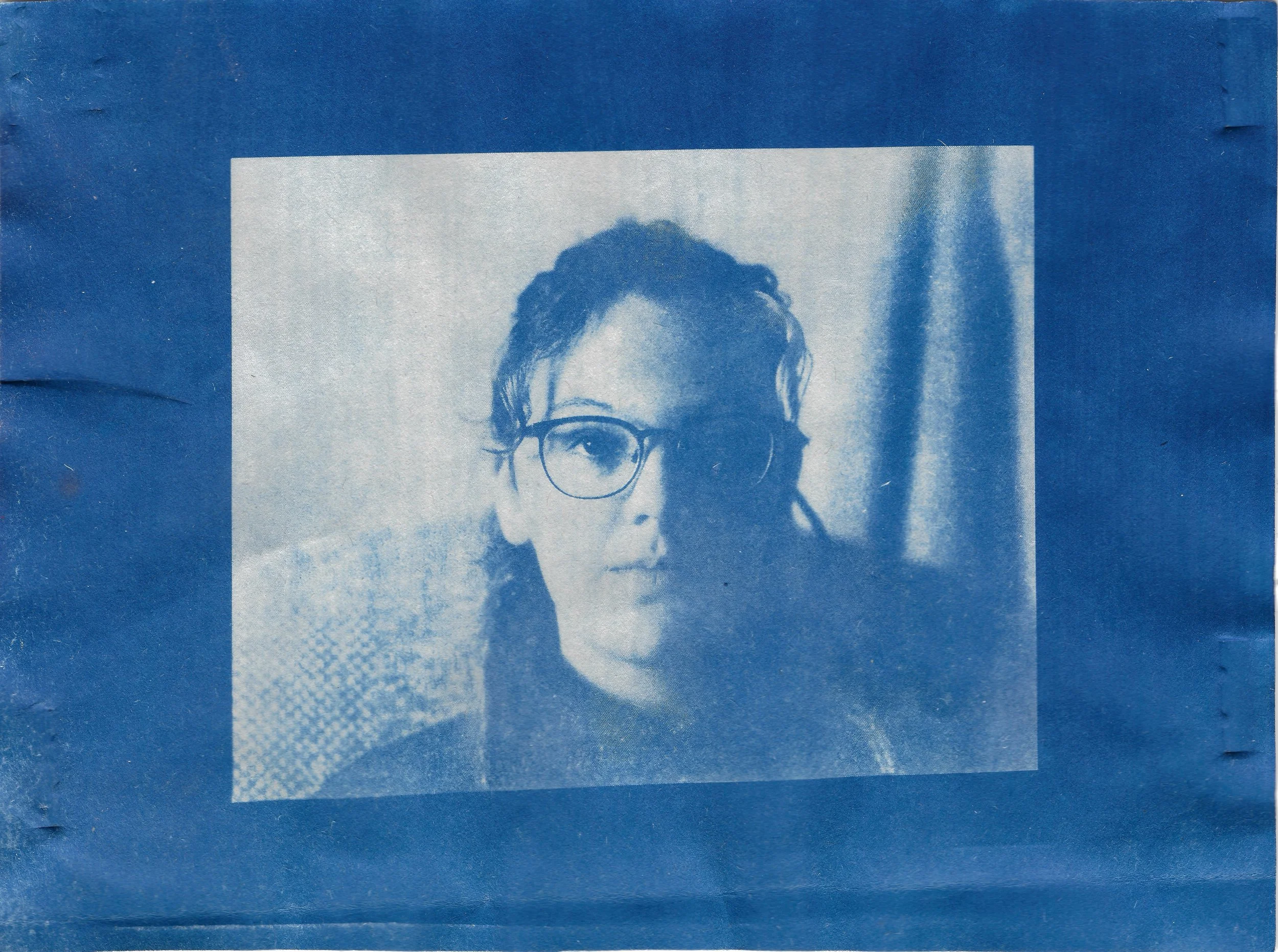
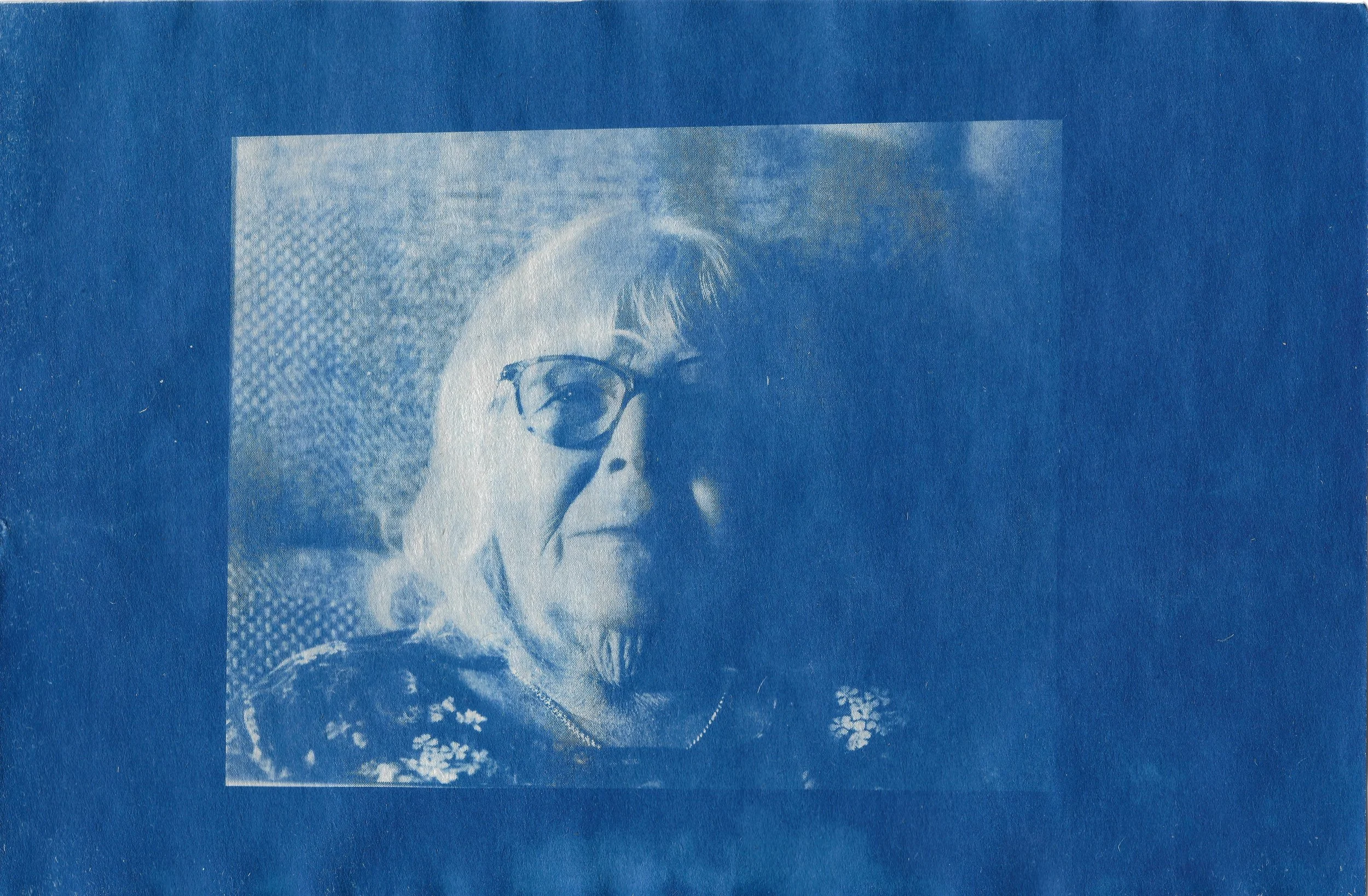
I used 100% recycled cartridge paper because it worked well in my trials. When I had fully coated the paper, I went over it again with the foam brush, always in the same direction, to even out the coating and make a more consistent image. I then allowed the paper to dry overnight in a dark place.
Once the paper was dry, I took a negative that I had edited to increase its contrast and printed it on a sheet of acetate. This clear plastic allows the
UV lamp I used, instead of direct sunlight, to affect only certain areas of the paper.
This reaction to the UV light is what makes the image possible. It changes the colour of the chemicals in the paper, resulting in the final image. I place the paper on the bottom with the chemically treated side facing up.
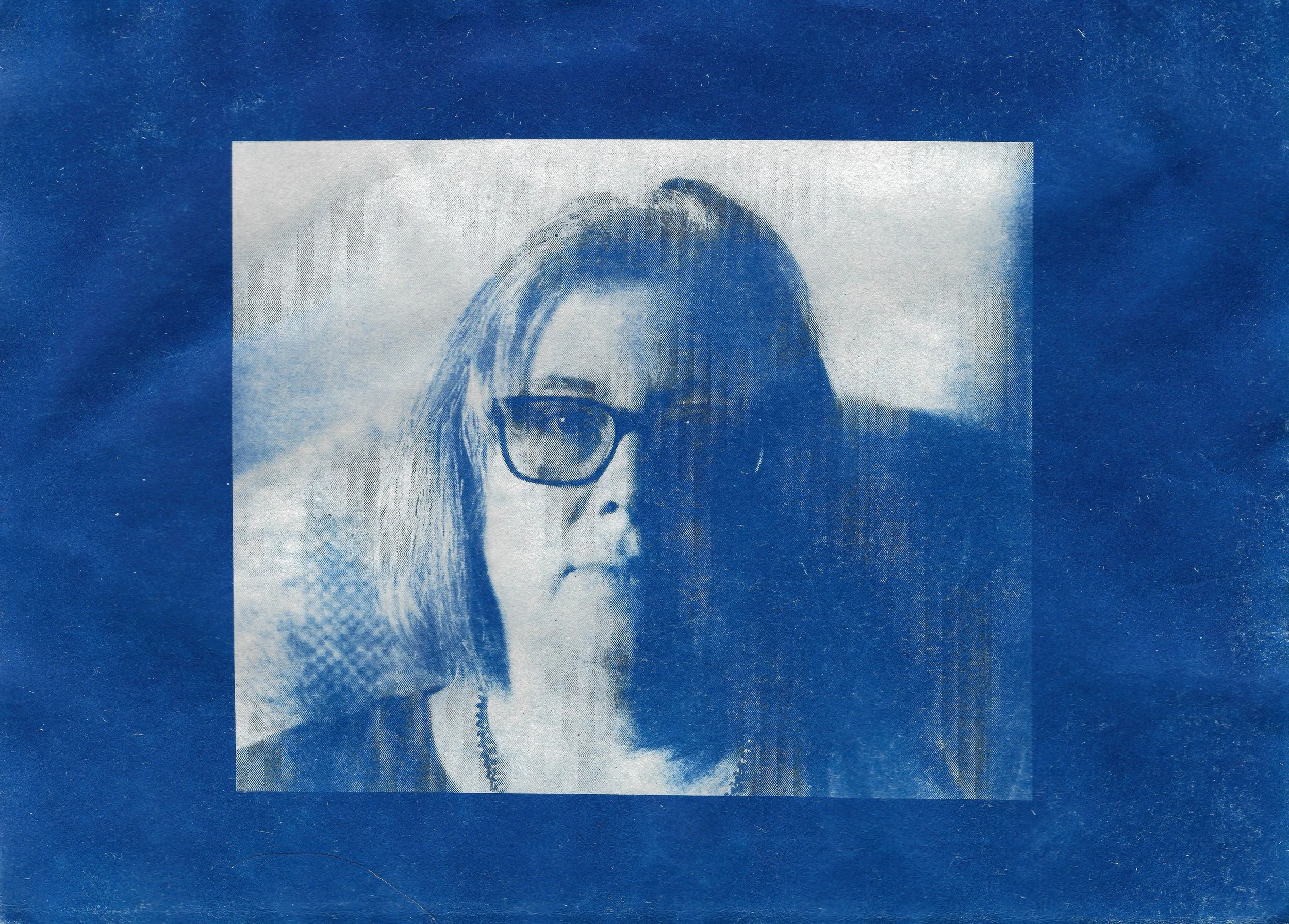
Next, I position the acetate negative on top. To ensure that it stays flat and maintains even contact with the paper, I place a pane of glass on top. I leave it under the UV lamp for four minutes. To test how well the image is rinsed, I let the last drops of water from the paper fall into a white bowl.
This helps me see the water's colour clearly; I repeat the process if needed. I sometimes need to change the water to achieve this. I test this by letting the last drop of water from the paper fall into a white bowl. I then place it in a Citric acid bath for 2 minutes, remove and let any excess water drip off, then place it in a tray and apply hydrogen peroxide to hasten the oxidation process. I leave it for 30 seconds. I then do a final rinse with water to remove the chemicals, and then leave it to dry.